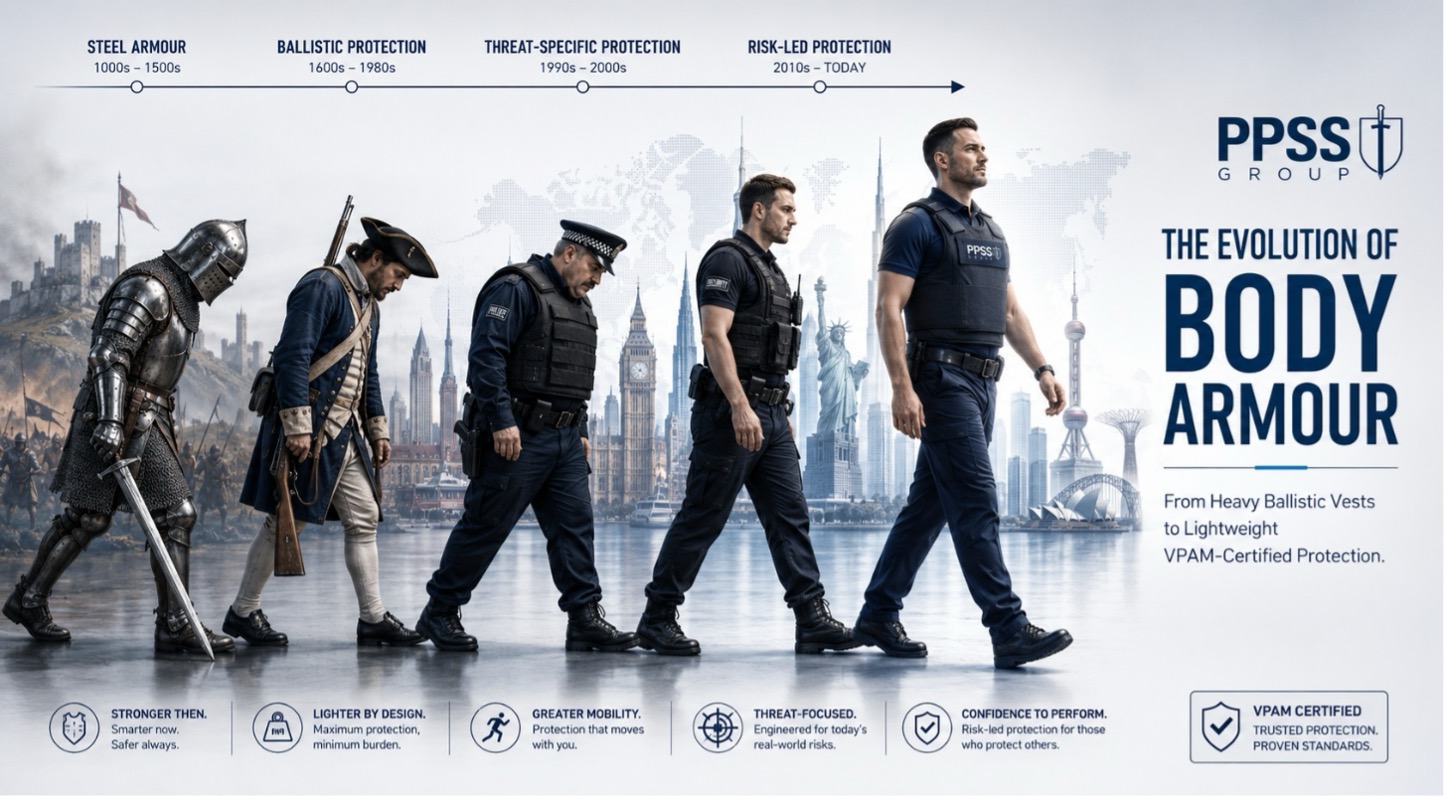
The evolution of body armour has continuously adapted throughout history in response to advances in weaponry and increased threat levels. Every generation of protection has been a direct answer to the threats of its time and understanding that pattern is the key to understanding where personal protection stands today.
From Animal Hide to Metal
The earliest examples of pre-modern armour relied on organic, natural materials such as animal hides, heavy leather and woven plant fibres. This lightweight protection was designed primarily to deflect blunt-force weapons like clubs or spears fashioned from stone, wood or bone.
As civilisation progressed and mining and metalworking developed, these organic, primitive armours became obsolete. The invention of early copper and bronze swords, designed specifically to pierce and break through armour hide, created the need for stronger, heavier body armour and thus the Bronze Era.
During the Bronze Age (2500 BCE – 800 BCE), armour relied mainly on beaten bronze plates covering the torso, neck and shoulders, the kind of protection worn by the ancient Greek Mycenaean warriors of the early 15th century BCE, whose exploits are widely believed to have inspired Homer’s Iliad and the Odyssey.
This armour was extremely heavy and while providing considerable protection against swords, spears, and arrows its bulky weight was a major handicap when it came to agility and freedom of movement on the battlefield. It was also typically very expensive to source and forge a full set of bronze armour. So, many Greek hoplites would use other more affordable and lighter types of armour made of layers of linen, thick leather, and metal plates.
From Chainmail to Modern Ballistics
Body armour has always innovated to become both stronger and lighter to match the protection needed to defend against threats without losing freedom of movement.
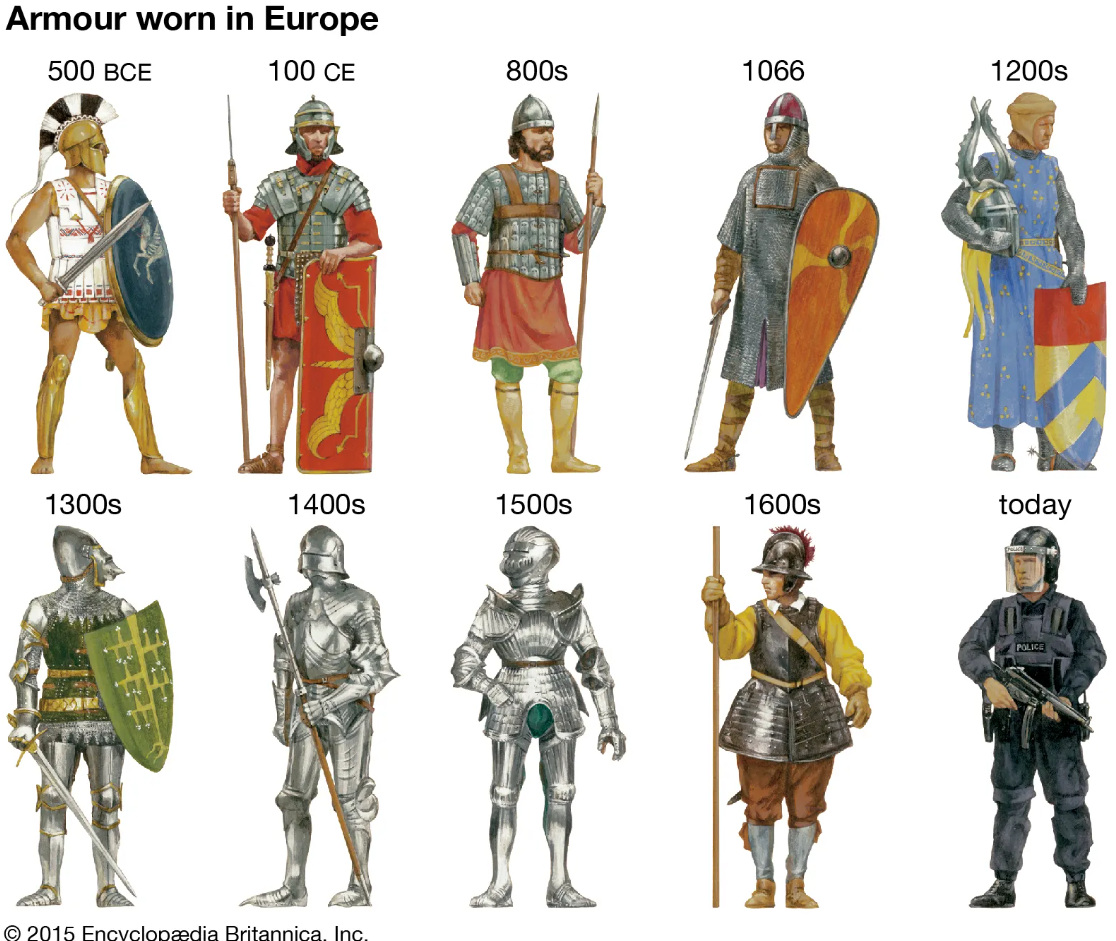
Across Europe, armour development progressed from Classical Antiquity through to the high Middle Ages in direct response to more lethal and sophisticated weaponry soldiers faced on the battlefield.
During the Early Iron Age, body armour had its first big innovation with the invention of Chainmail, a form of light weight armour made from small interlocking metal rings. Chainmail was first used by the Celts in 300 BCE and quickly spread to armies throughout Europe and Asia. It was extremely effective against slashes from swords and spears yet had little defence against blunt force weapons like axes or high force projectiles from crossbows or longbows.
For Centuries, chainmail was still the pinnacle of protection on the battlefield due to its combined flexibility and strength. However, all that changed with the invention of firearms in the 14th century that made traditional forms of armour completely obsolete.
This gave rise to the creation of plate armour. During the 15th Century, the highpoint of metal plate armoury design was the Gothic-style, with Knights across Europe taking to the field of battle in the most elaborate and impregnable suit of plate armour ever invented.
Throughout the Middle Ages, metal armour was worn by knights, noblemen and professional men at arms. As the armour required high levels of skill to produce it was also expensive and highly prized, so that only the richest men could afford to equip themselves with the best protection.
Chainmail countered swords. Plate armour resisted axes. Steel helmets protected against shrapnel. And, much later, soft ballistic armour emerged to defeat handgun ammunition. Yet the greatest change in the last twenty years has not been a breakthrough in materials alone. It has been a change in thinking.
The Evolution of Body Armour: A Change in Philosophy
Around the world, the operational realities facing frontline professionals have diversified. Today’s risks vary enormously depending on geography, legislation, occupation, culture and social environment. As a result, selecting body armour has become less about asking “What is the strongest armour?” and more about asking “What is the most likely threat?”
That shift in philosophy has arguably been the most significant development in personal protection since the introduction of modern ballistic armour.
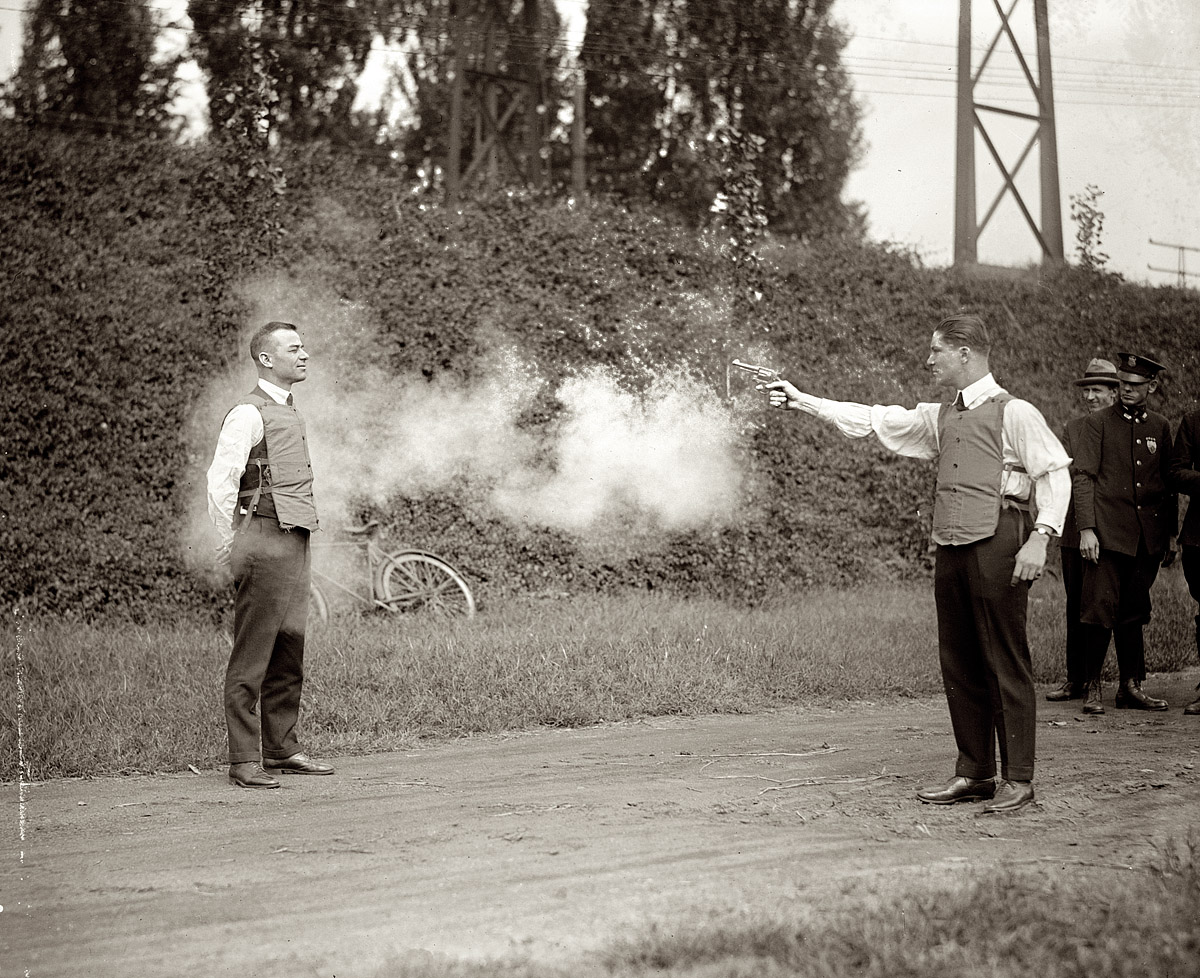
The first practical ballistic body armour was invented in 1893 by a polish priest called Casimar Zeglen. This early prototype of what is known today as a bulletproof vest was made using layers of silk and was based upon the revolutionary research of American physicist Dr. George E. Goodfellow who had written about the surprising bullet-resistant property of silk.
Goodfellow discovered the bullet-stopping power of silk during an autopsy, after noticing an intact bullet in the handkerchief of a gunshot victim, Charlie Storms, who was shot twice at close range by a 45.-caliber bullet. Goodfellow found that he had been shot in the heart but was surprised to see “not a drop of blood” exiting the wound and noted that the bullet that struck Storms would ordinarily have passed through the body.
This discovery paved the way for modern, lightweight, woven body armour, which evolved into today’s advanced synthetic aramid fibres such as Kevlar.
Kevlar was invented by Stephanie Kwolek, a chemist at DuPont, in 1965. Kwolek was working on developing a lightweight fibre to replace steel in radial tires when she discovered a liquid crystalline polymer solution that could be spun into a strong, flexible fibre. This fibre, later named Kevlar, exhibited remarkable properties such as high tensile strength and heat resistance, which immediately attracted attention for potential industrial and military applications.
As scientifically fascinating as the properties of bullet-proof protection is in the modern age, it is by no means the only method of body armour protection used by security and law enforcement professionals today. As with all body armour, it has its strengths and its weaknesses. Kevlar is an ideal body armour for absorbing energy from high-speed bullets, yet it can also be penetrated by a needle and will deteriorate under UV light or in wet conditions.
It’s been over sixty years since the invention of Kevlar and in the time many modern body armour alternatives have been invented, from soft body armour made from ultra-high-molecular polyethylene such as Dyneema or Spectra, to more solid and lightweight armour such as ceramic plate or carbon fibre. The right armour depends on the situation and the right protection for the job.
A Global Problem Requires Local Solutions
There is no universal threat profile. An armed police officer in the United States, a prison officer in England, a healthcare worker in Australia, a customs officer in Germany, a security professional in South Africa and a humanitarian worker operating in Latin America all face very different risks.
In parts of North America, firearms may represent a significant occupational concern for some agencies. Across much of Western Europe, however, the picture is often very different — frontline professionals are statistically far more likely to encounter knives, machetes, improvised spikes, broken bottles or physical assaults than gunfire.
Elsewhere, correctional facilities around the world report the use of homemade spikes and improvised stabbing weapons. Healthcare professionals in psychiatric settings face assaults involving everyday objects, while transport and retail security teams frequently experience punches, kicks and attacks with edged weapons.
The lesson is universal: threats are local, and protection should be too.
PPSS Group Helped Shift the Conversation
Long before “risk-led protection” became an accepted industry principle, PPSS Group questioned whether traditional body armour was still reflecting the realities faced by modern frontline professionals.
Established in 2009, the company was founded on the belief that reducing workplace violence required more than simply manufacturing another protective vest. It required understanding how violence itself was changing, and designing personal protective equipment around the threats professionals were actually encountering.
Rather than viewing knife resistance as sufficient on its own, PPSS Group’s research and product development increasingly focused on the growing prevalence of improvised spikes and blunt-force assaults, and the need for lighter, more wearable protective equipment. This thinking is explored further in why PPSS Group produces rigid body armour, and in a broader look at how reliable stab vests really are against real-world attack methods.
That philosophy ultimately led to the development of PPSS Group’s carbon fibre body armour platform, introduced in 2019 following years of research and development. The move reflected the company’s view that frontline professionals require dependable protection against the combination of knife attacks, spike attacks and blunt-force trauma — not simply one threat in isolation.
Today, that philosophy is reflected in PPSS Group’s certified body armour, independently tested to CAST/Home Office KR1 for knife resistance, SP1 for spike resistance and VPAM W5 for blunt-force protection.
Why Ballistic Armour Is Not Always the Right Choice
One of the biggest misconceptions surrounding personal protection is that ballistic armour automatically represents the highest standard of protection.
In truth it represents the highest standard against ballistic threats.
If firearms are not the principal operational risk, wearing heavier ballistic armour may introduce unnecessary weight, heat stress and fatigue without addressing the threats personnel are most likely to encounter. This is one of several factors covered in what you should consider when purchasing body armour.
For example:
- A psychiatric nurse in London or Stockholm is considerably more likely to encounter punches, bites or an improvised sharp object than a handgun.
- A prison officer in England may face homemade spikes or sharpened implements concealed within a custodial environment.
- A retail security officer working in a busy city centre may be at greater risk from knives, screwdrivers or bottles than firearms.
Conversely, certain law enforcement agencies in the United States, Latin America or parts of Africa may require ballistic protection because firearms form a much larger part of their operational threat assessment.
None of these scenarios is inherently more dangerous than another. They are simply different.
The most effective body armour is therefore the armour that reflects operational reality rather than historical assumptions.
About the Author
Jim Still is the Director of Business Development at PPSS Group and a former Royal Marine Commando. After serving in Afghanistan and Iraq and working as a Private Military Contractor, he brings extensive experience in risk management and personal protection.
Since joining PPSS Group in 2016, Jim has focused on developing and expanding protective solutions that help frontline professionals operate more safely in high-risk environments.