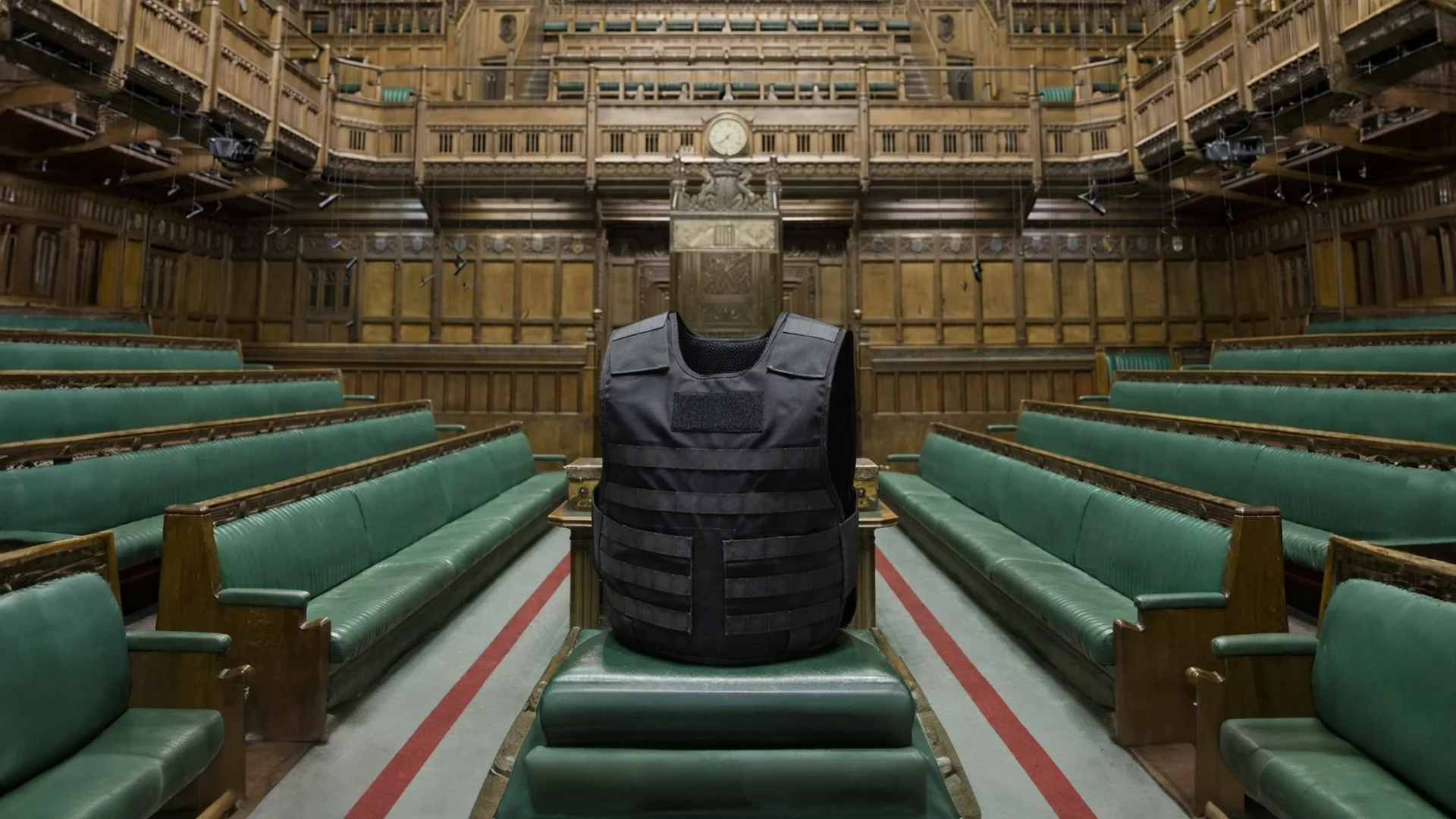
On 26 March 2026, UK Parliament debated whether body armour should be made mandatory for prison officers across England and Wales.
Key findings:
- Violence remains high
- Over 10,000 assaults on prison staff annually, including serious incidents involving weapons and boiling liquids
- Risk is widespread
- “Any prison officer working on any wing of any prison can be attacked.”
- Government action underway
-
- Up to 10,000 stab vests being introduced
- Mandatory use currently limited to high-risk units
-
- No full rollout yet
- The Government has not committed to body armour for all prison officers
- Concerns over current equipment
- Described as “unfit for purpose”, restrictive and causing health problems
- Issues with fit, particularly for female officers
- Key requirement identified
- “Body armour must be light in weight, not impair mobility and remain comfortable if worn for lengthy periods.”
- Core takeaway from Parliament
- “The selection of protective equipment must be right rather than rushed.”
Supporting context (House of Commons briefing – 20 March 2026):
- 10,326 assaults on prison staff (12 months to Sept 2025)
- 931 serious assaults
- 12.2% prison officer leaving rate
- Ongoing union calls for stab vests across the prison estate
Source: https://commonslibrary.parliament.uk/research-briefings/cbp-10593/
Why this debate matters now
This debate did not happen in isolation.
It follows a series of high-profile assaults on prison officers in 2025, alongside growing pressure from unions, frontline staff, and campaigners such as Claire Lewis. The incidents referenced include officers being stabbed with improvised weapons, attacked with boiling liquids, and hospitalised following coordinated assaults.
The Chair of the Prison Officers Association described the situation clearly:
Prison officers are “dealing with more prolific, violent and serious threats to our safety”
From experience, this is not new. It reflects the reality officers already face every day.
Risk exists across every prison, not just high-security units

One of the most important lines from the debate was:
“Any prison officer working on any wing of any prison can be attacked.”
That is not a political statement. It is operational reality.
Violence is unpredictable. It does not stay within high-security units. It happens across remand wings, general population, and lower category prisons.
Yet protection is still being rolled out selectively. So the question becomes difficult to ignore. If the risk is shared, should protection still be limited?
The real issue: is current body armour fit for purpose?
The debate did not just focus on whether prison officers should have body armour. It also raised concerns about whether protective equipment, more broadly, is always suitable for frontline use.
Reference was made to wider findings around PPE, where equipment had been described as:
“unfit for purpose”, restrictive and causing health problems
There were also concerns around inclusivity:
“Body armour failed adequately to accommodate female anatomy”
And a clear expectation of what protection should look like:
“Body armour must be light in weight, not impair mobility and remain comfortable if worn for lengthy periods.”
These are not technical details. They directly affect whether equipment is worn consistently or not.
A practical solution to a known problem
One of the consistent concerns raised during the debate was not just the need for protection, but how that protection is worn in practice.
As highlighted in Parliament, existing equipment can create additional strain and practical challenges for officers. Concerns were raised around items being:
“cumbersome and impractical utility belts, which are weighed down with equipment, with discomfort, health issues and even injuries”
Officers are often required to carry essential tools such as radios, batons and spray on their belts, which can concentrate weight around the hips and lower back during long shifts.
There was also a clear expectation set within the debate that any solution must go beyond protection alone:
“body armour must be light in weight, not impair mobility and remain comfortable if worn for lengthy periods.”
This reinforces an important point. Protection cannot come at the cost of usability.
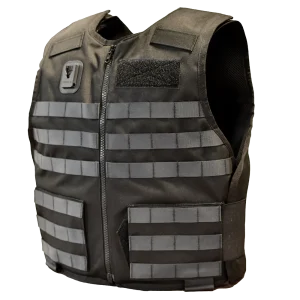
This is one example of how equipment design is evolving to address the challenges highlighted in Parliament. Solutions such as MOLLE compatible stab vests offer a more practical approach. By allowing equipment to be integrated directly onto the vest, weight can be distributed more evenly across the upper body rather than concentrated around the waist.
This supports improved comfort during extended wear, maintains mobility, and helps reduce the physical strain associated with carrying multiple items on a belt.
In the context of the concerns raised in Parliament, this is a clear example of how modern protective equipment can address both safety and practicality at the same time.
From experience: if it doesn’t work, it won’t be worn
Having spent 20 years in the UK prison service, including working as a national instructor at NTRG responding to all major incidents in the UK Prison service and training officers nationally, I have seen how quickly equipment becomes part of the problem if it is not designed properly.
- If something is too heavy, it comes off.
- If it restricts movement, it gets avoided.
- If it does not fit properly, particularly for female officers, it creates hesitation rather than confidence.
That is not theory. It reflects the reality prison officers face on a daily basis.
This is not just a policy discussion
This issue is not being driven by policy alone.
We recently spoke with Claire Lewis and Jed Mulheran, who have led a petition calling for improved protection for prison officers. Claire, a former prison officer, was herself seriously injured in an attack involving a broken bottle, and more recent incidents at HMP Frankland, where officers were doused in hot oil and attacked with improvised weapons, have further highlighted the risks faced by staff.
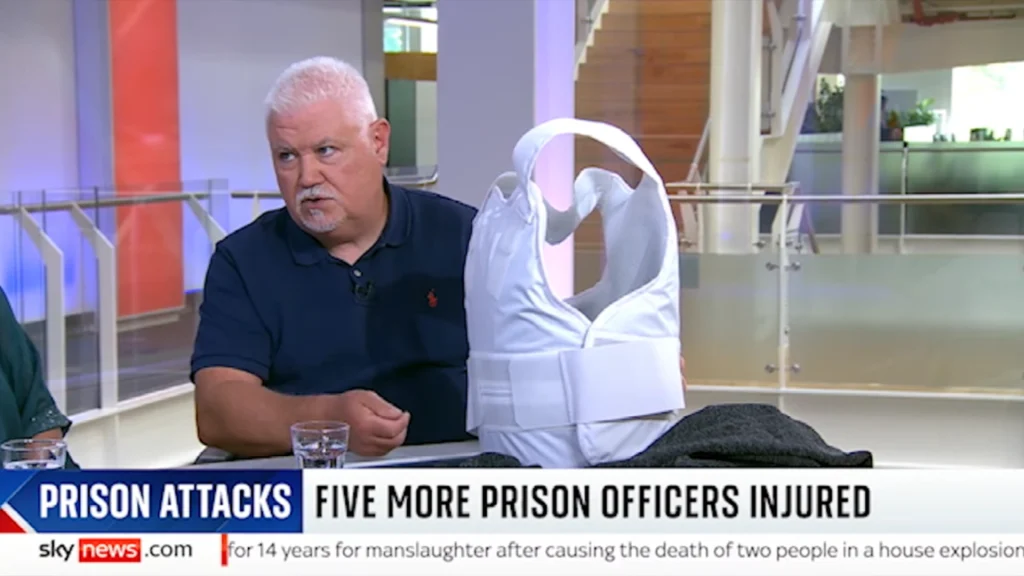
During a live segment on Sky News, the issue was discussed publicly as part of the growing national conversation around prison officer safety.
During that broadcast, our covert certified body armour was visibly shown on screen, helping to illustrate what modern, lightweight protection can look like in practice.
This is not theoretical. It is being raised by people who have experienced the consequences first hand.
“Right, not rushed” – the key takeaway
One of the most important points made during the debate was:
“The selection of protective equipment must be right rather than rushed.”
That is where the focus now needs to be.
Because introducing body armour across the prison estate is not just about availability. It is about whether it performs properly in real working conditions.
That means:
- Equipment that can be worn for full shifts
- Fit that works for both male and female officers
- Freedom of movement during incidents
- Practical integration into daily duties
Without these, the effectiveness of any rollout will be limited.
Where this leaves body armour for prison officers
The UK Parliament debate is a step forward.
It recognises the scale of violence and the need for improved protection.
But the next stage is critical.
Not just introducing body armour, but ensuring it is fit for purpose.
From a development perspective, this is where things have already evolved. There are now solutions available that address the concerns raised in Parliament. Lightweight body armour designed for extended wear, developed for both male and female officers, and built around real operational environments.
Final thoughts
The question is no longer whether prison officers need protection.
That has already been answered.
The challenge now is ensuring that protection works in practice.
Because at the end of the day, this is not about policy. It is about making sure the people doing one of the most demanding jobs in the public sector are properly protected when it matters most.
About the Author
Mike Bird brings over 35 years of frontline experience across custodial, security, and care settings. His career began with two decades in the UK prison service, where he specialised in the Use of Force and served as a National Instructor with the National Tactical Response Group (NTRG).
Following his service, Mike founded his own consultancy, delivering expert training and operational guidance to police and prison services in Abu Dhabi, Oman, Macedonia, Nigeria, The Hague, and across the UK. In recent years, he has also supported Secure Children’s Homes and Young Offender Institutes, working closely with senior leaders to manage high-risk individuals and improve staff safety.